 By admin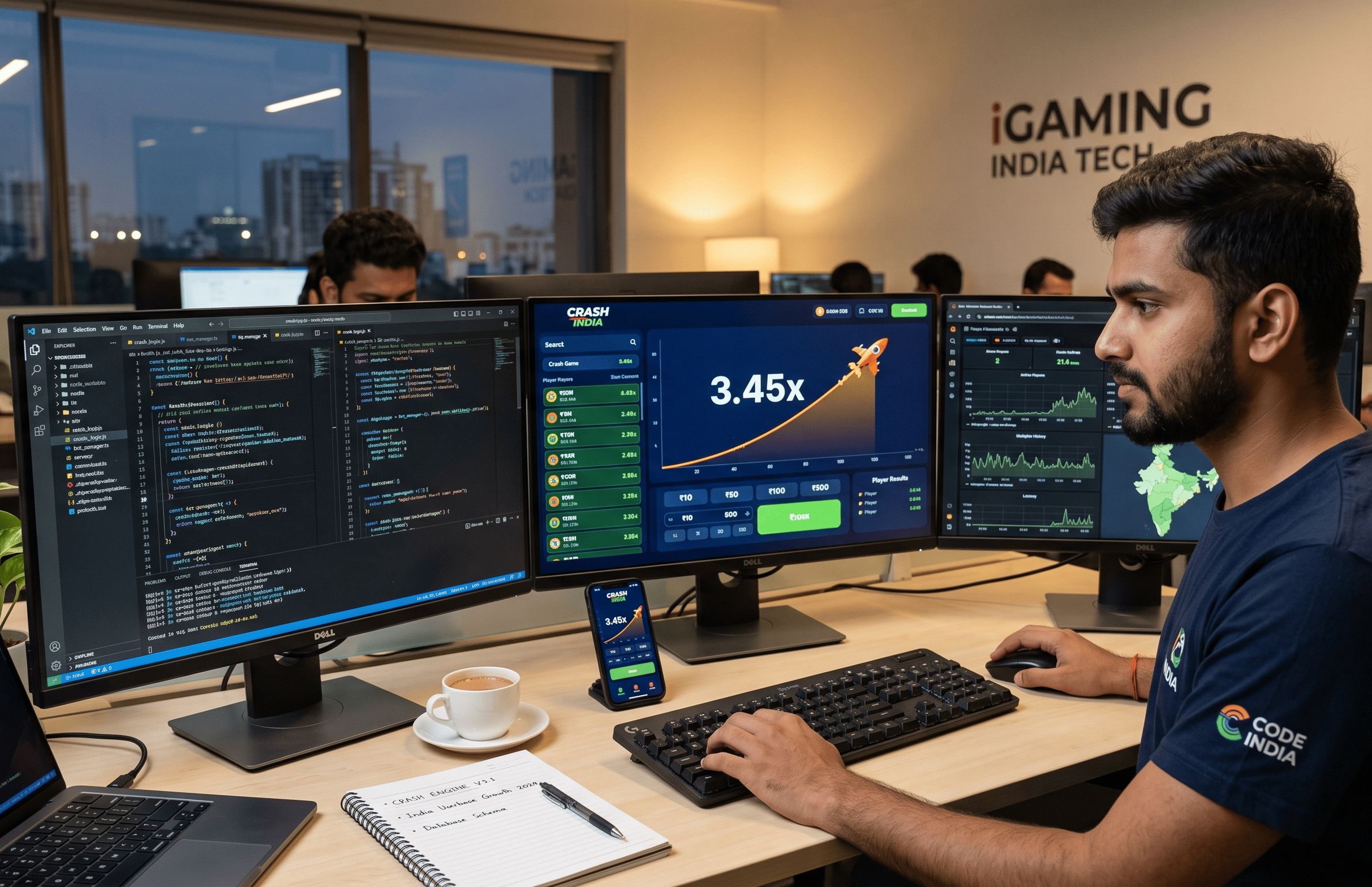
India’s digital infrastructure is undergoing a rapid evolution. With the aggressive rollout of 5G networks and a dominant mobile-first consumer base, the subcontinent has become a massive testing ground for high-frequency, real-time software applications. While fintech and streaming often dominate the headlines, the most rigorous stress tests for India’s cloud ecosystems are currently happening in the iGaming sector. Platforms like Lucky Star Casino are deploying enterprise-grade architectures to process thousands of concurrent, latency-sensitive user actions every second.
The undisputed flagship of this technological leap is a category of highly optimized applications known as Crash Games. Unlike traditional static digital slots, crash games operate more like high-frequency financial trading terminals. Here is a look under the hood at the sophisticated engineering required to make these games function seamlessly across India’s diverse network conditions.
A crash game centers on a continuously ascending mathematical curve. A multiplier starts at 1.00x and grows exponentially until a server-side trigger causes a “crash.” The primary engineering challenge is synchronization: the server must broadcast the exact same multiplier state to tens of thousands of active clients across the country simultaneously.
To achieve this, developers completely bypass traditional HTTP polling, which is too slow and resource-heavy for millisecond-critical data. Instead, the architecture relies on WebSockets to establish persistent, full-duplex TCP connections. When a player on a high-speed fiber connection in Bengaluru and another on a fluctuating 4G network in rural Bihar hit the “Cash Out” button at the exact same moment, the payload must reach the server instantly. By utilizing geographically distributed edge computing nodes (often localized in AWS Mumbai or similar data centers), platforms minimize ping and ensure that real-time state changes are processed with absolute precision.
Perhaps the most significant technological innovation in modern crash games is how they handle trust. Traditional online games historically relied on closed-source Random Number Generators (RNGs), which are impossible for the end-user to verify. Crash games solve this by utilizing cryptographic hashing – a system known as the Provably Fair algorithm.
The mechanics rely on the SHA-256 algorithm (the same cryptographic standard used in blockchain technology):
- The Server Seed: Before a round initiates, the server generates a random 16-character string. It then encrypts this string using SHA-256 and publicly displays the hash before any bets are placed.
- The Client Seed: The first players to place a wager generate an unencrypted “client seed” from their browsers.
- The Resolution: When the round begins, the server merges its raw seed with the client seed. This combined string is converted from hexadecimal into a decimal format, which is then run through a specific mathematical formula to determine the exact crash point.
Because the initial encrypted hash was published beforehand, any player can use an independent Python script or verification tool to reverse-engineer the math after the round ends. This proves mathematically that the crash multiplier was predetermined and not altered based on player bets.
To capture the Indian market, a web application must perform flawlessly on budget Android smartphones operating with limited RAM. Crash games achieve widespread accessibility by optimizing the front-end rendering pipeline.
Rather than relying on heavy Document Object Model (DOM) manipulation, modern crash interfaces are built using the HTML5 Canvas API or lightweight WebGL libraries like PixiJS. By offloading the rendering workload directly to the device’s GPU, these applications maintain a smooth 60 frames-per-second (FPS) while keeping the active memory footprint under 15MB. The visual animations are interpolated mathematically on the client side, meaning the smartphone only needs the raw multiplier data from the WebSocket to draw the ascending curve smoothly.
Crash games are far more than a passing entertainment trend in the iGaming sector; they are a masterclass in modern web architecture. By synthesizing WebSocket-driven low latency, SHA-256 cryptographic transparency, and highly optimized GPU rendering, developers are delivering frictionless experiences to millions of users. As India’s digital infrastructure continues to mature, the sophisticated tech stack powering these games sets a demanding new baseline for the future of all real-time web applications.